Norbert Trenkle, Qu’est-ce que la valeur, qu’en est-il de la crise?

Norbert Trenkle, Qu’est-ce que la valeur, qu’en est-il de la crise?

Texte critiqué par Michael Heinrich dans « L’effondrement du capitalisme. Krisis et la crise ».

Retranscription retravaillée d’un exposé tenu à l’université de Vienne (Autriche) le 24 juin 1998

Le tour d’horizon que je voudrais faire aujourd’hui est très large. Il part du niveau le plus fondamental de la théorie de la valeur, ou plus exactement de la critique de la valeur, c.a.d. au niveau des catégories de base de la société de production de marchandises : travail, valeur, marchandise et argent. Nous parlerons ensuite du niveau auquel appartiennent ces catégories, apparaissant comme des faits et des contraintes objectifs, réifiés et fétichistes, prétendument « naturels ». À ce niveau, celui du prix, du profit, du salaire, de la circulation etc., les contradictions internes et le côté historiquement insoutenable de la société marchande moderne se manifestent ouvertement sous forme de crise. Il est clair qu’ici, dans un temps limité, je ne peux pas livrer plus qu’une esquisse, mais j’espère quand même arriver à rendre compréhensibles les corrélations les plus importantes.

Lire la suite ici.

Interview with Michael Heinrich Carried out by Darren Roso, Berlin 2018.

What are the theoretical reasons for a biography? For you, Biography plays a fundamental part in understanding Marx’s theoretical work. Throughout the twentieth century, it seems that a debate over Marxist theory was equally a debate over Marx’s biography and intellectual development as such. How has this translated into your account?

I have several reasons for doing so. The first reason comes from my prior theoretical work. When I wrote The Science of Value (1991), which will finally appear in English soon, I didn’t simply present Marx’s critique of political economy. I interrogated Marx’s intellectual development. What was it about Marx’s intellectual development that led to the critique of political economy? This taking into account of Marx’s development was always present in my work. And in this I had to answer to – up to a certain point – Marx’s biography. For example, I had to use Marx’s letters for theoretical questions. But a letter is something quite different compared to a published text. With a letter you always have to ask to whom is this letter written? How free was Marx to tell the truth about his opinions? Did he merely seek to convince a publisher about a project or was he speaking to a comrade? You already need biographical context to answer these questions about the letters. The biographical context was therefore always present in my work, but I didn’t fully realise that at the time.

Lire la suite sur le site de Historical Materialism

[DE] Michael Heinrich, Abstrakte Arbeit

Abstrakte Arbeit

Michael Heinrich

in: W.F.Haug (Hrsg.), Historisch-kritisches Wörterbuch des Marxismus, Bd. 1, Hamburg 1994

Aus: http://www.oekonomiekritik.de/203AbstrakteArbeit.htm

Marx benutzt den Begriff aA beiläufig in den Ms 44 (MEGA I.2, 208) zur Charakterisierung entfremdeter, vereinseitigter Arbeit, womit er an Hegels Verwendung von aA in Zusammenhang mit der Teilung der Arbeit anknüpft (Rechtsphil. § 198, Enzykl. §§ 525,526). In einer neuen Bedeutung wird aA 1859 in Zur Kritik zu einem zentralen Begriff. Marx unterscheidet hier erstmals die Gebrauchswert hervorbringende von der Tauschwert schaffenden Arbeit. Weil letztere « gleichgültig gegen den besondern Stoff der Gebrauchswerthe » ist, ist sie auch « gleichgültig gegen die besondere Form der Arbeit » und wird von Marx deshalb als « abstrakt allgemeine Arbeit » bezeichnet (MEGA II.2, 109). In Zur Kritik wird aA noch weitgehend mit « einfacher » Arbeit identifiziert: « Diese Abstraktion der allgemein menschlichen Arbeit existirt in der Durchschnittsarbeit, die jedes Durchschnitts-Individuum einer gegebnen Gesellschaft verrichten kann… Es ist einfache Arbeit, wozu jedes Durchschnitts-Individuum abgerichtet werden kann… Die einfache Arbeit bildet die bei weitem größte Masse aller Arbeit der bürgerlichen Gesellschaft… » (MEGA II.2, 110) Marx knüpft damit an die Argumentation aus dem Elend der Philosophie an, daß einfache Arbeit Wertmaß sei und daß dies ein von der modernen Industrie hervorgebrachtes Resultat sei (MEW 4, 85). Allerdings hatte Marx dort noch nicht zwischen abstrakter und konkreter Arbeit unterschieden. Mit der Identifizierung von aA und einfacher Arbeit werden jetzt zwei ganz verschiedene Prozesse gleichgesetzt: der im mechanisierten Produktionsprozeß stattfindende Verlust von qualifizierter Arbeit, also einer historischen Veränderung auf der Seite der konkreten Arbeit und die im Austausch stattfindende Abstraktion von den tatsächlich vorhandenen unterschiedlichen Qualitäten der verschiedenen konkreten Arbeiten. In der 1. Aufl. des Kapital stellt Marx dann zwar heraus, daß der Doppelcharakter der Arbeit der « Springpunkt » sei, « um den sich das Verständniß der politischen Oekonomie dreht » (MEGA II.5, 22). Aber erst in der 2. Aufl. wird aA von einfacher Arbeit streng unterschieden. Erst jetzt verwendet Marx den Begriff aA bereits zu Beginn des ersten Kapitels. So heißt es z. B. nicht mehr, ein Gebrauchswert hat Wert, « weil Arbeit in ihm vergegenständlicht » (MEGA II.5, 20), sondern « weil abstrakt menschliche Arbeit in ihm vergegenständlicht » ist (MEGA II.6, 72).

Continuer la lecture

Chris Harman, Le taux de profit et le monde d’aujourd ‘hui
Le taux de profit et le monde d’aujourd ‘hui
Chris Harman

Texte original: International Socialism 115, été 2007.
« La « tendance à la baisse du taux de profit » est un des éléments les plus controversés du legs intellectuel de Karl Marx. Il la considérait comme une de ses contributions les plus importantes à l’analyse du système capitaliste, l’appelant, dans ses premiers cahiers pour le Capital (maintenant publiés sous le nom de Grundrisse), « de tous points la loi la plus importante de l’économie politique moderne ». Mais elle a été soumise à la critique dès la publication du volume trois du Capital en 1894. »

Paul Boccara, La théorie de la portée révolutionnaire du progrès technique et la lutte pour la démocratie nouvelle.

La théorie de la portée révolutionnaire du progrès technique et la lutte pour la démocratie nouvelle.

Ce texte de Paul Boccara traite des différentes théories de la crise et de la question de la baisse tendancielle du taux de profit. Nous le publions comme document à discuter, nous ne partageons pas ses prises de positions, ni certaines de ces analyses.

Lien vers le pdf.

[ENG] Michael Heinrich, Crisis Theory, the Law of the Tendency of the Profit Rate to Fall, and Marx’s Studies in the 1870s

Article de Michael Heinrich paru dans la Monthly Review en avril 2013. Cet article sera notamment l’objet de la critique de Sam Williams.


Michael Heinrich, Crisis Theory, the Law of the Tendency of the Profit Rate to Fall, and Marx’s Studies in the 1870s


The development of crisis theory within the Marxian tradition has been central to much of our work in the last several years. The view that the various fragmentary references to crisis theory in the three volumes of Capital constitute a fully developed coherent structure, which only requires diligent exegesis, is a view that has never seemed sensible to us.

Recent research into the evolution of Marx’s manuscripts in connection with the production of the Marx-Engels-Gesamtausgabe (MEGA), the historical-critical edition of the complete writings of Karl Marx and Friedrich Engels, has confirmed our understanding in a very exciting way. It is now clear that Marx never ceased to develop his thinking on the phenomena of crises in capitalism, and never ceased to discard earlier formulations; for example, at the end of his life he was focused on questions of credit and crisis. Monthly Review rarely presents its readers with discussions of economic theory at a relatively high degree of abstraction; this, however, is such an occasion. We trust that the author’s exemplary clarity will permit ready access to readers with any degree of interest in Marx’s theory; for those who wish to become familiar with the conceptual outline of Marx’s work, we cannot do better than to recommend the author’s An Introduction to the Three Volumes of Karl Marx’s Capital (Monthly Review Press, 2012).

Read more…

[DE] Robert Kurz Die Himmelfahrt des Geldes. Strukturelle Schranken der Kapitalverwertung, Kasinokapitalismus und globale Finanzkrise

Résultat de recherche d'images pour "ascension représentation"

Cet article de Robert Kurz est discuté par Michael Heinrich dans sa contribution « Effondrement du capitalisme. Krisis et la crise ». Il est actuellement disponible sur la revue Exit!.


Robert Kurz

Die Himmelfahrt des Geldes

Strukturelle Schranken der Kapitalverwertung, Kasinokapitalismus und globale Finanzkrise

1. Realkapital und zinstragendes Kapital

Zu den vielen schizoiden Strukturen der modernen Welt gehört auch das widersprüchliche Verhältnis von Arbeit und Geld. Arbeit als abstrakte Entäußerung menschlicher Energie im Prozeß betriebswirtschaftlicher Rationalität und Geld als die Erscheinungsform des dadurch erzeugten ökonomischen »Werts« (d.h. einer fetischistischen Phantasmagorie des objektivierten gesellschaftlichen Bewußtseins) sind die beiden Seiten derselben Medaille. Geld repräsentiert oder »ist« im kapitalistischen Selbstzweck einer unaufhörlich gesteigerten Akkumulation dieses Fetisch-Mediums nichts anderes als »tote Arbeit«, real abstraktifiziert zur dinglichen Gestalt. Der menschliche »Stoffwechselprozeß mit der Natur« (Marx) ist gerade dadurch zur abstrakten, an sich sinnlosen Entäußerung von Arbeitskraft geworden, daß sich in der potenzierten Fetischform des Kapitals das Geld dem menschlichen Aktor gegenüber verselbständigt hat: Nicht der menschliche Bedürfniszweck steuert die Verausgabung von Energie, sondern umgekehrt hat sich die dinglich verselbständigte »tote« Form der verausgabten Energie die Befriedigung der menschlichen Bedürfniszwecke untergeordnet. Die Naturbeziehung ebenso wie die gesellschaftlichen Beziehungen sind zu bloßen Durchlaufprozessen der »Verwertung von Geld« geworden.

Continuer la lecture

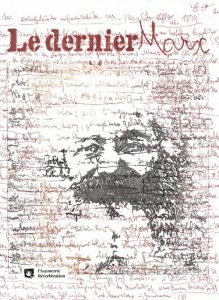
Le dernier Marx

Le dernier Marx

Dans la dernière décennie de sa vie, Karl Marx entame un vaste travail de recherche sur les sociétés pré-capitalistes, à travers notamment la lecture des grands anthropologues et historiens de son siècle tel Lewis Morgan.
« Le dernier Marx » présente, pour la première fois en français, des traductions d’extraits des notes prises lors de ces recherches, ainsi que les textes les plus importants écrits à ce sujet par différents auteurs. On y découvre un Marx toujours passionné et prêt à remettre en cause certains présupposés déterministes et « eurocentriques » de sa pensée, loin de la figure monolithique forgée par ses épigones.
Comme au siècle dernier on a redécouvert le jeune Marx, sa fougue et sa poésie combattante, il faut redécouvrir le « dernier Marx », meilleur remède à toutes les orthodoxies qu’on a construit en son nom mais contre lui.

La suite ici

The Unmaking of Marx’s Capital Heinrich’s Attempt to Eliminate Marx’s Crisis Theory by Andrew Kliman, Alan Freeman, Nick Potts, Alexey Gusev, and Brendan Cooney


Critique de Michael Heinrich par « l’école keynésienne »:

Michael Heinrich’s recent Monthly Review article claims that the law of the tendential fall in the rate of profit (LTFRP) was not proved by Marx and cannot be proved. Heinrich also argues that Marx had doubts about the law and that, for this and other other reasons, his theory of capitalist economic crisis was only provisional and more or less in continual flux.

This response shows that Heinrich’s elementary misunderstanding of the law –– his belief that it is meant to predict what must inevitably happen rather than to explain what does happen –– is the source of his charge that it is unproved. It then shows that a simple misreading of Marx’s text lies at the basis of Heinrich’s claim that the simplest version of the LTFRP, “the law as such,” is a failure. Marx’s argument that increases in the rate of surplus-value cannot “cancel” the fall in the rate of profit is then defended against Heinrich’s attempt to refute it. Finally, the paper presents evidence that Marx was indeed convinced that the LTFRP is correct and that he regarded the crisis theory of volume 3 of Capital as finished in a theoretical sense.

Lien vers le pdf.